Quick answer: Fear of driving on the motorway usually isn't about your ability - it's a learned threat response. At speed, with more to track and nowhere to pull over, your brain flips into high alert, and once a wave of panic links itself to motorways it can fire automatically. Because it's learned, it can be unlearned: building up gradually, a longer out-breath, good preparation, and reading the adrenaline as readiness rather than danger all help you feel calm and in control again.
You're fine on the roads you know - but the moment a motorway slip road comes into view, your chest tightens, your hands grip the wheel, and every "what if" floods in. If you're scared of driving on the motorway, it doesn't make you a bad or nervous driver. It means your nervous system has learned to treat the motorway as a threat, and starts bracing before you've even joined it. The reassuring part? What's learned can be unlearned - often more quickly than you'd think.
A client came to me who had spent two years quietly rerouting her life around motorways - adding forty minutes to the school run, even turning down a promotion that meant a longer commute - while feeling perfectly calm on every other road. What eventually shifted things wasn't forcing herself onto the M5; it was first understanding why her body hit the panic button in the first place.
And you're in good company. The AA found that almost half of motorists know friends or family who avoid motorways because of nerves - it's one of the most common driving fears there is, common enough to have a clinical name: amaxophobia.
What motorway fear actually is
Your body runs on two broad gears: a "go" mode (the sympathetic nervous system) that handles speed, pressure and split-second decisions, and a "rest" mode that handles calm and recovery. A motorway asks a lot of "go" - faster traffic, lorries, lane changes, and no easy place to stop. For most drivers that's simply concentration. But if a frightening moment - a near-miss, a panic attack, or even just a long spell away from motorways - has ever attached itself to that setting, your subconscious can file "motorway = danger" and sound the alarm automatically, before conscious reasoning gets a look in.
Why it's not about your driving
When that alarm fires, adrenaline narrows your focus and drags your attention straight to the worst case. Your heart pounds, the road seems to speed up, and it all feels like proof that something is wrong. It isn't - it's an over-protective nervous system doing its job a little too well. The catch is what happens next: taking the A-road instead brings instant relief, and that relief quietly teaches your brain that the motorway really was the danger. So avoidance, which feels like the sensible choice, is exactly what keeps the fear alive - and slowly shrinks the roads you feel able to use.
How to feel calmer driving on the motorway
None of these are about forcing yourself to be brave. They work because they speak your nervous system's language - familiarity, a slower out-breath, and staying in the task in front of you, rather than relying on willpower.
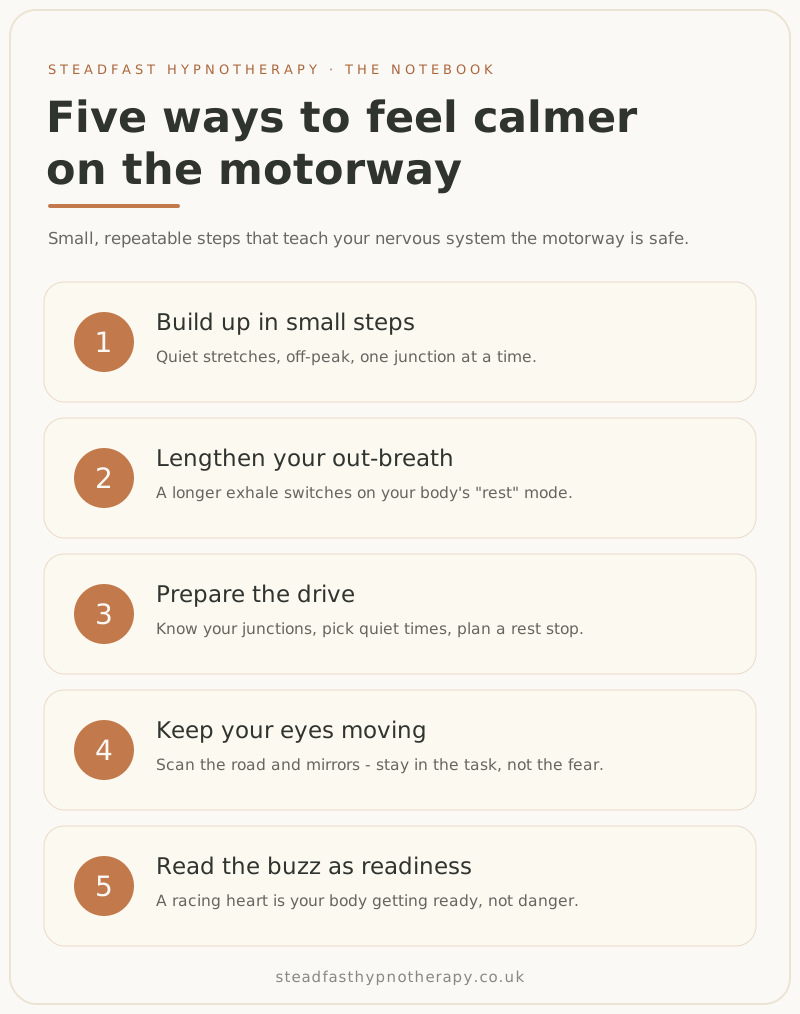
- Build up in small steps. You don't have to tackle a six-lane smart motorway on day one. Start with a short, quiet stretch at an off-peak time - one junction to the next - and extend it as your confidence grows. Gentle, repeated exposure is how the brain learns a situation is safe; avoidance only ever teaches it the opposite.
- Make your out-breath longer than your in-breath. Before you set off, and at any calm moment on the road, breathe out slowly for longer than you breathe in. A longer exhale nudges your body toward "rest" mode - slow-paced breathing has been shown to raise parasympathetic ("rest and recover") activity - which takes the sharpest edge off the panic response.
- Prepare the drive, not just the destination. Know your junctions, check the route, pick a quieter time of day, and plan where you'll stop for a break. Predictability lowers the brain's threat signal - the more your mind knows what's coming, the less it feels the need to brace.
- Keep your eyes and attention moving. Fear wants you to fixate - on the lorry, on the speed, on the "what if". Deliberately scanning your mirrors and the road ahead keeps you in the task rather than the fear, and gives those catastrophic thoughts far less room to build.
- Read the buzz as readiness, not danger. A quicker heartbeat and heightened alertness are your body getting ready to perform, not proof that something's wrong. Telling yourself "I'm ready" rather than "I'm scared" makes a measurable difference - in one study, people who reframed their nerves as excitement performed better than those who tried to force themselves calm.
You don't have to feel fearless to drive the motorway. You just have to teach your nervous system that it's safe enough.
When it's more than everyday nerves
An occasional white-knuckle drive is part of being human. But if you're planning your life around avoiding motorways, panicking behind the wheel, or noticing the anxiety spill into other areas - your sleep, your Sunday nights, your sense of freedom - it's worth taking seriously, and worth a word with your GP. Fear that's kept alive by avoidance rarely fades on its own, but it does respond really well to the right, focused support.
How hypnotherapy helps with driving anxiety
Solution-focused hypnotherapy works with that subconscious threat response rather than against it. Rather than digging back through every frightening drive, we spend our time building the calm, capable state you want at the wheel - so your mind gets to rehearse motorway driving as something manageable rather than dangerous, and that old automatic alarm gradually loosens its grip. The NHS lists talking therapies and hypnotherapy among the treatments for phobias, and the work here is forward-looking, practical and paced entirely to you.
The client I mentioned earlier is a good example. Over a handful of sessions we worked on settling that automatic threat response and mentally rehearsing calm, confident drives before she ever turned the key - and she built back up gradually, first one junction, then a full stretch of motorway to visit family. As she put it, it was never about becoming fearless; it was about her nervous system finally trusting that it was safe enough to ease off.
If picturing that slip road made your stomach tighten, that's a good sign this is exactly the kind of thing this work can help with.